
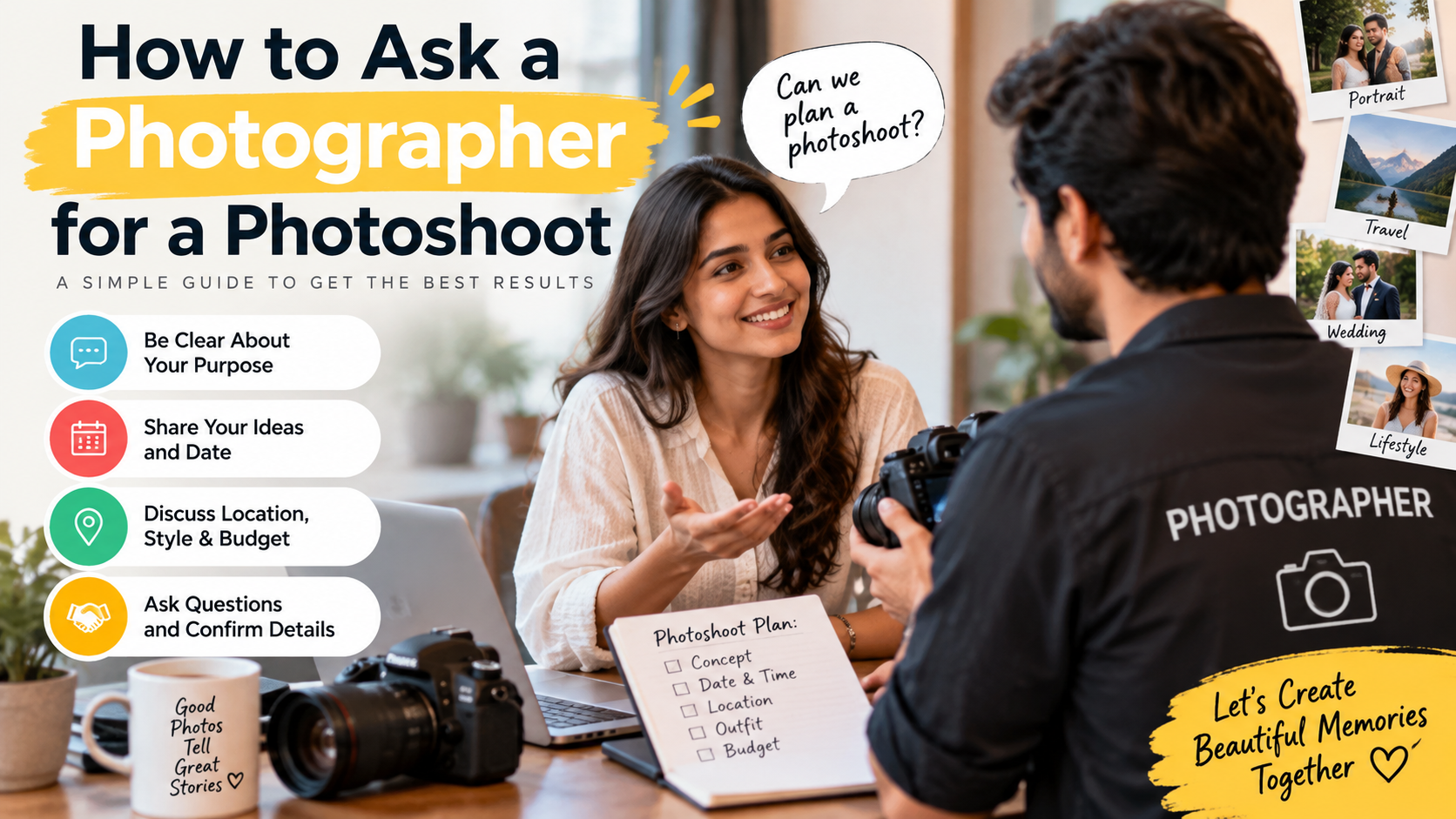
How To Ask A Photographer For A Photoshoot (A Simple, Friendly Guide)
Booking a photoshoot can feel a little scary if you have never done it before. You might not know what to say, how much to offer, or what details a photographer actually needs from you. The good news is that most photographers are happy to hear from new clients, and the process is much easier than it looks once you know the basic steps.
This guide walks you through everything, from finding the right person to writing your first message, agreeing on a price, and preparing for the actual day. Nothing here is complicated. Think of it as a checklist you can follow the next time you want nice pictures taken, whether that is for a birthday, a graduation, a small business, or just because you want some fresh photos of yourself.
Why The First Message Matters
A lot of people overthink their opening message. They worry about sounding awkward or unprofessional. In reality, the person on the other end just wants to know three things: who you are, what you need, and when you need it. If your message answers those three questions clearly, you are already doing better than most people who reach out.
Photographers get messages every day that say things like "Hi, are you available?" with nothing else attached. These messages are hard to reply to because there is no context. A short, clear message saves everyone time and shows that you have thought about what you want, even if you are still flexible on the details.
Step One: Find The Right Photographer For Your Style
Before you even write a message, spend a little time looking through different photographers' work. Every photographer has their own style. Some prefer soft, natural light and candid moments. Others like bold colours, dramatic poses, or a more editorial look. If you want family portraits but you only look at photographers who shoot weddings, you might not get the vibe you were hoping for.
Look at a photographer's recent posts, not just their best three pictures from years ago. This gives you a better idea of what they are currently capable of and whether their editing style matches your taste. Pay attention to how they photograph people who look similar to you in age, skin tone, or body type, since lighting and posing choices can look very different from person to person.
Once you find two or three photographers whose work you genuinely like, you are ready to reach out.
Step Two: Decide What Kind Of Shoot You Want
Before writing your message, take a few minutes to think through the basics of what you are picturing. You do not need every detail figured out, but having rough answers to these questions will make your message stronger:
● What is the occasion? (birthday, engagement, product shots, headshots, a personal shoot, a themed concept, and so on)
● Where would you like it to happen? Indoors, outdoors, a studio, your home, a specific location you already have in mind?
● How many people will be in the photos?
● Roughly how many final images do you want?
● Do you have a date in mind, or is your schedule flexible?
● What is your budget range?
You don't have to send all of this information right away, but thinking it through beforehand means you won't be caught off guard when the photographer asks.
Step Three: Write Your First Message
Here is a simple structure you can copy and adjust:
1. A short greeting and how you found them
2. What kind of shoot you are hoping for
3. Rough date or time frame
4. Location, if you have one in mind
5. A question about their availability and pricing
Here is an example message:
"Hi! I came across your page and really love how natural your outdoor portraits look. I'm hoping to book a shoot for my sister's graduation sometime in the next few weeks, probably outdoors in a park setting. There would be about four of us in the photos. Could you let me know your availability and your pricing for something like this?"
Notice that this message is friendly, specific, and gives the photographer enough to work with. It does not demand an immediate answer or make assumptions about price. It simply opens the conversation.
If you are reaching out for something more formal, like a business headshot or a product shoot, you can adjust the tone slightly to sound more professional, but the same basic structure still works.
What To Do If You Don't Know What You Want Yet
Sometimes you know you want photos but you don't have a clear picture of the style, location, or theme. That is completely fine to say out loud. Photographers often enjoy this kind of conversation because it lets them share ideas based on their experience.
You could write something like: "I know I want some new photos of myself, but I'm still figuring out the vibe. Do you have suggestions based on what usually works well?" A good photographer will ask you a few questions in return, like what the photos are for, what colours or moods you like, or whether you prefer a more posed look or something candid.
Talking About Price Without Feeling Awkward
Money conversations feel uncomfortable for a lot of people, but photographers expect this question and are used to answering it. You are not being rude by asking about cost early on. In fact, asking early saves both sides from wasting time discussing a shoot that might not fit your budget.
A simple way to ask is: "What packages do you offer, and what is included in each one?" This lets the photographer explain their pricing structure without you having to guess a number first. Many photographers have tiered packages based on the length of the session, the number of edited photos you receive, and whether you get printed copies or just digital files.
If a quoted price is outside what you can spend, it is okay to say so directly. You might say, "That's a bit more than I was planning to spend, is there a shorter session or a smaller package that might work?" Many photographers can offer a mini session or fewer edited photos for a lower cost. If they cannot adjust the price, they may still be able to point you toward someone else whose pricing fits your budget better.
Questions Worth Asking Before You Book
Once a photographer replies with their availability and pricing, it helps to ask a few more questions before committing:
● How many final edited photos will I receive?
● How long does editing usually take?
● Do you provide raw or unedited files as well?
● What happens if the weather is bad on an outdoor shoot day?
● Is a deposit required to hold the date?
● What is the cancellation or rescheduling policy?
You don't need to ask all of these in your very first message. Most of this comes up naturally once you are further along in the conversation and closer to booking.
Understanding Deposits And Contracts
Many photographers ask for a deposit to secure your date. This is a normal part of the business and protects both sides. The deposit usually confirms that you are serious about booking, and it also compensates the photographer if you cancel last minute, since they may have turned down other clients for that date.
If a photographer sends you a contract, take a few minutes to actually read through it rather than skimming. Look for the shoot date and time, location, payment terms, what happens if you need to reschedule, and how many images you'll receive. If anything is unclear, it is completely reasonable to ask questions before signing.
Preparing For The Day Of The Shoot
Once everything is booked, a little preparation goes a long way toward getting photos you'll actually love.
Think about your outfits ahead of time. Solid colours generally photograph better than busy patterns, and it helps to bring one or two backup outfit options in case the first one doesn't work with the lighting or location. If more than one person is being photographed, try to coordinate colours loosely rather than matching exactly, since matching too perfectly can sometimes look stiff in photos.
If the shoot involves hair and makeup, plan enough time beforehand so you are not rushing. Arriving a few minutes early also helps, since it gives you time to settle in rather than jumping straight into posing while still catching your breath.
If you have any specific poses or reference photos you like, save a few examples on your phone. You don't need dozens, just two or three that capture the general feeling you are going for. Photographers can use these as a starting point and then build on them with their own creative ideas.
Communicating During The Shoot
Once you're actually in front of the camera, it's completely normal to feel a little stiff or unsure of what to do with your hands. Good photographers will guide you through poses and give direction, but you can also speak up if something feels uncomfortable or unnatural.
If you don't like how a particular pose feels, just say so. Something as simple as "I'm not sure this one feels right, can we try something else?" is enough. Photographers would much rather adjust in the moment than have you feel unhappy with the final images later.
It also helps to ask for a quick preview of a few shots partway through the session, especially if this is your first time working with that photographer. Seeing a couple of images on the back of the camera can help you both understand whether the direction feels right or needs a small tweak.
After The Shoot: What Happens Next
Once the session wraps up, the photographer will usually give you a rough timeline for when to expect your edited photos. This can range from a few days for a simple session to several weeks for something more detailed, like a large event or a heavily stylized concept shoot.
If the timeline passes and you haven't heard anything, it is fine to send a polite check-in message rather than assuming the worst. Something like, "Hi, just checking in on the photos whenever you get a chance, no rush!" keeps things friendly while still letting them know you are waiting.
When you receive your photos, take some time to look through all of them before responding. If you have feedback, such as wanting a specific photo brightened or a background object removed, most photographers are open to small revision requests, though this can vary depending on their policy, so it's worth asking about this beforehand too.
Building A Relationship For Future Shoots
If you had a good experience, it is worth mentioning that you'd like to work with the same photographer again in the future. Photographers often remember returning clients fondly, and some even offer small discounts or priority booking to people who come back.
Leaving a review or recommending them to a friend is also a simple way to show appreciation, and it helps the photographer's business grow, especially if they are just starting out or working independently rather than through a large studio.
Red Flags Worth Watching For
Most photographers are professional and easy to work with, but it is still smart to notice a few warning signs before you commit your money and time to someone.
Be cautious if a photographer refuses to show you a portfolio or only has a handful of heavily filtered sample images with no variety. Be cautious too if they push you to pay the full amount upfront with no contract or written confirmation of the date, since a legitimate business will usually have some form of agreement in place, even if it is a simple message thread confirming the details.
Slow or vague replies before you have even booked can sometimes hint at how communication will go later on, though everyone gets busy occasionally, so use your judgement rather than assuming the worst from one delayed reply. If something feels off, it is completely fine to keep looking elsewhere. There will always be another photographer whose working style suits you better.
Different Types Of Photoshoots You Might Consider
Not every shoot looks the same, so it helps to know a few common categories when you are describing your idea to a photographer.
A portrait session usually focuses on one or two people and is fairly relaxed in pacing, often used for personal photos, dating profiles, or simple family updates. An event shoot covers something happening in real time, like a birthday party or a small gathering, where the photographer captures candid moments as they unfold rather than posed shots. A themed or concept shoot involves planning around a specific idea, outfit, or story, and usually takes more preparation from both sides, including props, costumes, or a particular location.
Product photography is a different category altogether, focused on items rather than people, and often requires a controlled setting like a lightbox or studio backdrop, since lighting consistency matters a lot when you are trying to make a product look good for a website or online store. Corporate or headshot photography sits somewhere in between, usually simpler in setup but expected to look polished and professional, often used for LinkedIn, company websites, or official documents.
Knowing which category your idea falls into helps the photographer understand your expectations faster and lets them recommend the right kind of setup, lighting, and timeframe for what you are picturing.
A Few Final Tips
Do not be afraid to reach out to more than one photographer if you are unsure. Comparing a couple of quotes and styles is completely normal and most photographers understand that you are shopping around before making a decision.
Be upfront about your budget rather than waiting until the last minute to bring it up. This saves everyone time and avoids awkward conversations later.
Give yourself enough lead time. Popular photographers, especially around graduation season, wedding season, or festive holidays, can get booked out weeks or even months in advance. If you have a specific date in mind, reach out as early as you can.
Finally, remember that photographers are creative people who genuinely want your shoot to turn out well. Approaching them with a clear, friendly message and being open about what you want makes the entire process smoother for both sides. The more comfortable and prepared you feel going in, the more that comfort will show up in your final photos.
Asking for a photoshoot does not need to be complicated. A little research, a clear first message, and honest communication about your budget and expectations will get you most of the way there. The rest comes down to trusting the process and enjoying the day itself.