
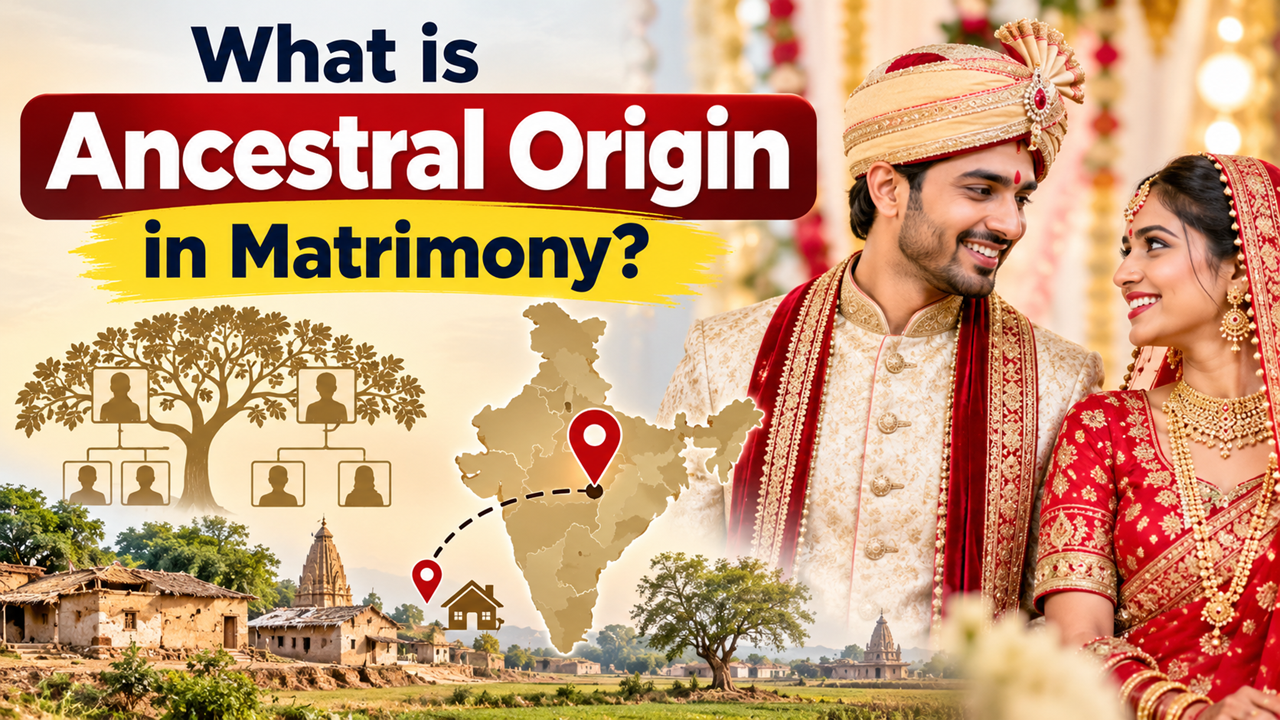
What is Ancestral Origin in Matrimony
Ancestral Origin in Matrimony
When people fill out a matrimony profile in India, they come across a field called "ancestral origin." Many users skip it or fill it quickly without much thought. But this small detail carries a lot of weight for families who care about roots, community, and background. In this blog, we will look at what ancestral origin means, why it appears on matrimony sites, and how it shapes marriage decisions across the country.
What Does Ancestral Origin Mean
Ancestral origin refers to the place, region, or community where a person's family originally came from, generations back. It is not always the same as where someone currently lives. A family might have settled in Mumbai for the last fifty years, but their ancestral origin could be a small town in Uttar Pradesh or a village in Tamil Nadu. This detail traces the family's roots rather than their present address.
For many households, knowing this helps them understand a person's cultural habits, food preferences, language, and even the type of rituals followed at home. Someone from a Marwari background, for example, may carry different customs than someone whose family originally belonged to Bengal, even if both now live in the same city.
Why Matrimony Sites Ask About It
Matrimony platforms such as Shaadi, Bharat Matrimony, and Jeevansathi include an ancestral origin field because millions of Indian families still value shared background when picking a life partner. This is not always about strict rules. Sometimes it is simply about comfort. Two people from similar backgrounds may find it easier to relate to shared festivals, food habits, or family traditions.
Parents searching for a match for their son or daughter often use this filter to narrow results. They may look for candidates from the same state, same community, or even the same district their family hails from. This makes the ancestral origin section one of the most searched filters on many matrimony platforms, right alongside caste, religion, and education.
Region and State Origin
One of the biggest parts of ancestral origin is the region or state a family traces back to. India has enormous diversity, and every state carries its own language, food, dress, and customs. A family that traces its roots to Punjab may have very different daily habits compared to a family from Kerala.
Because of this, many families prefer partners from a similar regional background. It reduces the adjustment needed after marriage, especially around food, language spoken at home, and festival celebrations. However, in recent years, more people are open to inter-state matches, especially in cities where people from different states already live and work together.
Caste and Sub-Caste Connections
Caste remains closely tied to ancestral origin in Indian matrimony. Many profiles list not just a broad caste category but also a specific sub-caste, which often points back to a particular ancestral region or occupation from many generations ago. For instance, a family might mention that their ancestors were traders, farmers, or from a priestly line, and this detail is often linked to where the family originally lived.
Sub-caste details can also indicate migration patterns. A family belonging to a certain sub-caste in Gujarat, for example, might have moved there decades ago from Rajasthan, yet its members would still list ancestral roots in the state their family truly began.
Gotra and Its Role
For many Hindu families, especially those following traditional customs, gotra plays an important role in matrimony matching. Gotra refers to the lineage or clan a family belongs to, tracing back to a common ancestor, often a sage from ancient times. Marriages within the same gotra are traditionally avoided because both partners are seen as belonging to the same ancestral bloodline.
This is one of the clearest links between ancestral origin and matchmaking. Families check gotra carefully before finalising a match, sometimes even consulting a priest or family elder to confirm there is no shared ancestry. While younger generations in cities may not always follow this strictly, it still holds strong importance in many communities, particularly in North India.
Religion and Community Background
Ancestral origin also touches on religious and community identity. A family's religious practices, sect, and community customs often trace directly back to their ancestral roots. For example, a Sikh family originally from Punjab may follow different rituals compared to a Sikh family whose ancestors settled in Sindh before partition.
Communities that migrated during major historical events, such as the partition of India in 1947, often carry unique stories about their ancestral origin. Many Punjabi, Sindhi, and Bengali families today live far from their original homeland, yet they continue to honour customs from where their grandparents or great-grandparents once lived.
Family Background and Roots
Beyond region, caste, and religion, ancestral origin also reflects a family's broader background story. Some families take pride in a long history in one place, while others carry stories of migration for work, education, or historical events. This background often shapes family values, the way elders are respected, and how much importance is placed on tradition during a wedding.
When someone mentions ancestral origin in a matrimony biodata, it often opens a conversation about family history. Families sometimes enjoy learning where the other side's roots lie, discovering shared connections, distant relatives, or even old family friendships that go back generations.
How Families Use This Filter While Searching
On most matrimony platforms, users can filter search results by ancestral origin, state, mother tongue, and community. Parents managing a profile for their child often set these filters early to reduce the number of unsuitable matches. This saves time and keeps the search focused on people who share similar backgrounds.
Some families are strict about this filter, only considering candidates from the exact same origin. Others use it as one of many factors, alongside education, profession, and personal compatibility. A growing number of young professionals, especially those settled abroad or in metro cities, treat ancestral origin as helpful information rather than a strict requirement.
Changing Views Among the Younger Generation
Attitudes toward ancestral origin are shifting, especially among people born and raised in cities or those who have lived abroad. Many young adults today value personal compatibility, career goals, and shared interests over strict background matching. For them, ancestral origin becomes a talking point rather than a deciding factor.
Still, family involvement in Indian marriages means that even open-minded individuals often need to balance their own preferences with what their parents expect. This creates an interesting mix where a person may be flexible about origin, while their parents still prefer a match closer to their own community or state.
Balancing Tradition With Modern Choices
Finding the right balance between tradition and personal choice is one of the biggest challenges in Indian matchmaking today. Ancestral origin sits right at the centre of this balance. Some families use it as a guideline, staying open if other qualities align well, such as values, career, and personality.
Wedding planners and matrimony counsellors often suggest that families keep an open mind about origin, especially in cases where the couple shares strong compatibility otherwise. Many successful marriages today happen between people from very different ancestral backgrounds, proving that shared understanding and respect often matter more than shared geography.
Tips for Filling Ancestral Origin in a Matrimony Profile
If you are creating or helping someone create a matrimony profile, here are a few simple tips for this section:
- Be accurate about the state or region your family originally comes from, even if you currently live elsewhere.
- Mention your caste and sub-caste clearly if your family follows traditional matching practices.
- Include gotra details if your community considers this important, especially in Hindu matchmaking.
- Add a short note about your family's history if it feels relevant, such as a long-standing presence in one region or a notable migration story.
- Stay honest rather than adjusting details to appear more "matchable," since mismatched expectations often cause problems later.
A clear and honest ancestral origin section builds trust early in the matchmaking process and helps avoid confusion once families start talking.
Common Questions Families Ask
Many users have questions when they see this field for the first time. Here are a few common ones, answered simply:
Does ancestral origin have to match my current address? No. Ancestral origin refers to where your family originally came from, not where you live now.
Is ancestral origin the same as caste? Not exactly. Caste is a separate detail, though it is often connected to ancestral origin since many castes trace back to specific regions or communities.
Do all families care about this detail? Not all. Some families place heavy importance on it, while others see it as a small formality. It depends on personal beliefs, community customs, and how traditional the family is.
Can two people from different ancestral origins have a successful marriage? Yes, absolutely. Many couples from completely different regions or communities build strong, happy marriages. Shared values and mutual respect often matter more than shared ancestry.
The Role of Language and Mother Tongue
Ancestral origin often connects closely with the language a family speaks at home. A family with roots in Andhra Pradesh may speak Telugu even after moving to Delhi decades ago, passing the language down through grandparents and parents. This shared language becomes a marker of ancestral identity that outlives the actual physical distance from the original homeland.
When matchmaking, mother tongue often works hand in hand with ancestral origin. Some families feel that a shared language makes daily conversations easier, especially for elders who may not be comfortable speaking anything other than their native tongue. Younger couples, on the other hand, often communicate in English or Hindi regardless of their family's original language, which reduces how much weight this factor carries for them personally.
Migration Stories Behind Many Families
Very few Indian families have stayed in one single place for many generations without any movement. Trade, education, government postings, and historical events have all pushed families across the country and even overseas. A family originally from Bihar might now be settled in Gujarat because a great-grandfather moved there for business decades ago. Their matrimony profile would still list Bihar as the ancestral origin, even though three generations have grown up in a completely different state.
These migration stories often become interesting conversation points during matchmaking meetings. Families sometimes discover shared travel paths, similar reasons for moving, or even mutual acquaintances from their ancestral hometown. Such connections can build an instant sense of familiarity between two families meeting for the first time.
Ancestral Origin Among NRI Families
For Indian families living abroad, ancestral origin takes on added meaning. Parents who grew up in India but raised their children in countries like the United States, Canada, or the United Kingdom often want their children to marry someone who understands their original culture, even if that person also grew up overseas. In this case, ancestral origin becomes a way of preserving cultural identity across generations and across borders.
Many NRI matrimony platforms include detailed ancestral origin fields for exactly this reason. Parents searching for a match for their children abroad often look for candidates whose family history matches their own state or community back in India, hoping this shared background will make it easier to maintain traditions even while living far from home.
How Ancestral Origin Affects Wedding Traditions
Once a match is finalised, ancestral origin often shapes how the wedding itself is celebrated. Rituals, food, music, and even the colour of wedding outfits can vary greatly depending on where a family's roots lie. A wedding blending two different ancestral backgrounds may include elements from both sides, creating a unique celebration that honours each family's heritage.
Some couples choose to have two ceremonies, one following each family's traditional customs, especially when their ancestral backgrounds differ significantly. This approach allows both families to feel represented and respected, while also giving the couple a chance to experience and appreciate two different cultural traditions within their own marriage.
The Emotional Side of Ancestral Connection
Beyond the practical and cultural reasons, ancestral origin also carries emotional weight for many families. Grandparents and elders often feel proud when a marriage strengthens ties to their original hometown or community. Stories about ancestral villages, old family homes, or long-lost relatives sometimes resurface during matchmaking conversations, adding a personal and sentimental layer to what might otherwise seem like a formal detail on a profile.
For some people, learning more about their own ancestral origin becomes a journey of self-discovery. Filling out a matrimony profile can prompt someone to ask parents or grandparents questions they never considered before, uncovering family history that had been quietly passed down without much discussion.
Why This Detail Still Matters Today
Even as India modernises rapidly, family and community identity remain deeply connected to marriage decisions. Ancestral origin gives families a quick way to understand cultural background, helping them predict how well two families might blend together during weddings, festivals, and everyday family life.
At the same time, this detail is slowly losing its strict grip among younger, more independent thinkers who prioritise personal connection over background matching. The coming years will likely see a mix of both approaches, where ancestral origin remains a point of interest but no longer acts as a hard rule for finding a life partner.
Final Thoughts
Ancestral origin in matrimony is more than just a small box to tick on a profile. It carries history, culture, and family identity within a few simple words. Whether a family treats it as essential or simply informative, understanding what this term means helps everyone navigate the matchmaking process with more clarity.
As India continues to change, marriages are becoming a blend of tradition and personal choice. Ancestral origin remains part of that story, reminding families where they come from, even as they build new lives and new connections through marriage.